


Key Takeaways:
- Established Performance Benefits: Ingredients such as creatine and caffeine have substantial human research supporting specific exercise outcomes, while other compounds show benefits under particular conditions.
- Evidence Quality Matters: Human trials, ingredient amounts, and measurable performance outcomes help determine whether supplement claims are scientifically justified.
- Goal-Specific Selection: The most appropriate supplements depend on the athlete's sport, training demands, and intended performance benefits.
Which sports nutrition ingredients have credible research behind them? Evidence based supplements are supported by scientific studies examining specific effects on exercise performance, recovery, or physiological function. However, the strength of that evidence varies considerably between ingredients and athletic goals.
BRL Sports recognizes the importance of scientific evidence in helping athletes navigate sports nutrition. Understanding how ingredients are studied, what outcomes they influence, and where research remains limited is essential for making informed supplementation decisions.
This article identifies sports nutrition ingredients with meaningful research support, explains how to evaluate scientific claims, and helps athletes distinguish promising formulations from products relying primarily on marketing language.

Which Sports Nutrition Ingredients Have the Strongest Research Support?
Creatine, caffeine, dietary nitrates, and beta-alanine are among the most extensively researched sports nutrition ingredients. Each supports different aspects of exercise performance, making their relevance dependent on an athlete's training demands.
The following research backed supplements have demonstrated benefits in human studies:
- Creatine: Supports strength, power, and repeated high-intensity exercise performance by increasing muscle phosphocreatine availability. Its strongest evidence is associated with resistance training and short-duration efforts.
- Caffeine: Can improve endurance performance, alertness, and perceived exertion. Its effects vary with individual sensitivity, exercise conditions, and the amount consumed.
- Dietary nitrates: May improve exercise economy by influencing nitric oxide availability and the oxygen cost of exercise. Benefits are not consistent across all populations, particularly highly trained athletes.
- Beta-alanine: Increases muscle carnosine concentrations, helping buffer acidity during demanding exercise. Its benefits are most relevant to sustained high-intensity efforts rather than prolonged, steady-state endurance activity.
These ingredients demonstrate why science based sports nutrition requires matching the supplement to a specific performance outcome. Strong evidence for strength or repeated sprint performance does not automatically translate into improved aerobic capacity.
For athletes exploring endurance-focused applications, the VO2 max supplements science review examines the research surrounding oxygen-related performance claims, while the Best supplements for runners guide offers additional context for running-specific supplementation.
What Makes a Sports Nutrition Ingredient Evidence-Based?
A sports nutrition ingredient is considered evidence-based when well-designed human studies demonstrate measurable benefits for a specific exercise outcome. The strongest evidence comes from findings that can be replicated across studies, particularly when researchers examine relevant athletic populations.
Not all clinically studied ingredients have the same level of scientific support. When evaluating supplement claims, several distinctions matter.
Human research versus laboratory findings: Laboratory studies can identify promising biological mechanisms, but these effects must also be demonstrated in humans before meaningful performance benefits can be established.
Studied amounts versus product formulations: An ingredient may have positive research findings at a particular dose, but those results cannot automatically be applied to products containing different amounts or combinations.
Measurable outcomes versus marketing claims: Improvements in exercise economy, time-trial performance, or repeated exercise capacity provide more useful evidence than broad promises of increased energy or enhanced oxygen delivery.
This distinction is particularly important when evaluating claims about aerobic fitness. The How much can you grow VO2 max, the science article explores the role of training and physiological factors in improving maximal oxygen uptake.
Ultimately, evidence based supplements should be assessed according to what research demonstrates, not simply whether an ingredient has appeared in a scientific study.

How Can Athletes Choose Evidence-Based Endurance Supplements?
Athletes should choose evidence based endurance supplements by matching scientifically studied ingredients to their training goals, rather than relying on broad performance claims. The most useful formulation depends on the demands of the sport and the outcomes an athlete wants to support.
Match Ingredients to Training Goals
Different endurance activities place different demands on the body. For example, runners and cyclists may prioritize sustained performance and exercise economy, while athletes performing repeated high-intensity efforts may benefit from ingredients targeting muscle buffering or power output.
Three considerations can guide supplement selection:
- Performance relevance: Prioritize ingredients studied for outcomes that match the demands of the sport.
- Research-supported amounts: Compare disclosed ingredient quantities with those investigated in human studies.
- Formulation transparency: Look for clearly identified compounds and sufficient information to assess their intended functions.
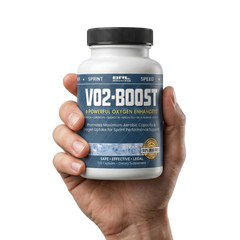
BRL Sports offers a Science-backed endurance supplements collection for athletes exploring endurance-focused nutrition options. The VO2-Boost ingredient breakdown also allows readers to examine individual ingredients and their proposed roles within a formulation.
Selecting supplements through this approach helps athletes connect scientific evidence with practical training needs while keeping expectations grounded in the outcomes researchers have actually measured.

Final Thoughts
Evidence based supplements can play a valuable role in sports nutrition when their ingredients are supported by credible human research and matched to specific athletic goals. From creatine and caffeine to dietary nitrates and beta-alanine, the strongest findings relate to clearly defined performance outcomes rather than broad promises of enhanced fitness.
For BRL Sports, a research-informed approach to endurance nutrition emphasizes understanding what individual ingredients can support and how they fit into an athlete's training demands. Prioritizing scientific evidence, transparent formulations, and practical relevance helps athletes make more confident supplementation decisions.
Frequently Asked Questions About Evidence Based Supplements
What are evidence-based supplements?
Evidence-based supplements contain ingredients supported by scientific research for specific health or performance outcomes. In sports nutrition, the strongest evidence generally comes from controlled human studies that demonstrate measurable improvements relevant to exercise.
Are research-backed supplements guaranteed to improve athletic performance?
No. Research-backed supplements may improve specific performance outcomes, but individual responses depend on factors such as training status, nutrition, dosage, and exercise type. An ingredient's effectiveness in one sport does not guarantee similar benefits in another.
What is the difference between clinically studied and clinically proven ingredients?
Clinically studied ingredients have been evaluated in human research, regardless of the results. The term clinically proven suggests stronger evidence of effectiveness, but it is not a guarantee. Athletes should examine the actual study findings rather than relying on either label.
Do endurance athletes need different supplements than strength athletes?
Their priorities often differ. Endurance athletes may focus on sustained exercise performance, fueling, and exercise economy, while strength athletes may prioritize power and repeated high-intensity efforts. Some ingredients, including caffeine, can be relevant to both.
Can athletes benefit from supplements without changing their training?
Certain supplements can provide acute performance benefits without requiring changes to a training program. However, supplements do not replace progressive training, adequate nutrition, or recovery, which remain central to long-term athletic development.
Are supplements with more ingredients more effective?
Not necessarily. A larger ingredient list does not establish greater effectiveness. What matters is whether the ingredients have relevant evidence, are included in appropriate amounts, and work toward the product's intended purpose.
How can athletes verify whether a supplement is scientifically supported?
Athletes can look for peer-reviewed human studies, transparent ingredient quantities, and research involving comparable exercise conditions. Independent third-party testing can also help assess product quality and contamination risk, although it does not establish effectiveness.
Are evidence-based sports supplements safe for everyday use?
Safety depends on the ingredient, dosage, product quality, and individual health considerations. Even well-researched ingredients can cause adverse effects or interact with medications. Athletes should follow product instructions and seek professional guidance when appropriate.
Sources:
- Guest, N. S., VanDusseldorp, T. A., Nelson, M. T., Grgic, J., Schoenfeld, B. J., Jenkins, N. D. M., Arent, S. M., Antonio, J., Stout, J. R., Trexler, E. T., Smith-Ryan, A. E., Goldstein, E. R., Kalman, D. S., & Campbell, B. I. (2021). International society of sports nutrition position stand: Caffeine and exercise performance. Journal of the International Society of Sports Nutrition, 18, Article 1. https://doi.org/10.1186/s12970-020-00383-4
- Kreider, R. B., Kalman, D. S., Antonio, J., Ziegenfuss, T. N., Wildman, R., Collins, R., Candow, D. G., Kleiner, S. M., Almada, A. L., & Lopez, H. L. (2017). International Society of Sports Nutrition position stand: Safety and efficacy of creatine supplementation in exercise, sport, and medicine. Journal of the International Society of Sports Nutrition, 14, Article 18. https://doi.org/10.1186/s12970-017-0173-z
- Maughan, R. J., Burke, L. M., Dvorak, J., Larson-Meyer, D. E., Peeling, P., Phillips, S. M., Rawson, E. S., Walsh, N. P., Garthe, I., Geyer, H., Meeusen, R., van Loon, L. J. C., Shirreffs, S. M., Spriet, L. L., Stuart, M., Vernec, A., Currell, K., Ali, V. M., Budgett, R. G., ... Engebretsen, L. (2018). IOC consensus statement: Dietary supplements and the high-performance athlete. British Journal of Sports Medicine, 52(7), 439–455. https://doi.org/10.1136/bjsports-2018-099027