

VO2 max is the maximum amount of oxygen your body can use during intense exercise — and it is the single best predictor of endurance performance. You can increase it through high-intensity interval training, altitude exposure, consistent aerobic base work, and targeted supplementation. Most athletes see measurable improvements within 4 to 8 weeks of structured training.
Key Takeaways:
- Training Method: Interval and sweet spot training drive measurable VO2 max improvements when applied consistently.
- Supportive Tools: Supplements and environmental strategies can enhance oxygen delivery and endurance performance.
- Progress Timeline: Most people see VO2 max gains within 4–6 weeks of focused, structured training.
Improving endurance isn’t just about logging more miles. If you're serious about pushing your limits, understanding and increasing your VO2 max can change the game. VO2 max is your body’s ability to use oxygen during intense exercise. The higher it is, the more efficiently you can perform, whether you're chasing a personal record or just looking to feel stronger during workouts. Athletes across all levels are starting to realize that targeting VO2 max directly leads to better stamina, faster recovery, and stronger performance.
At BRL Sports, we specialize in performance. Our vo2 max supplements have supported thousands of endurance athletes, from elite competitors to everyday grinders. We develop science-backed formulas designed to optimize oxygen delivery, energy production, and overall athletic output. Our products are trusted by those who demand more from their training and their results.
In this piece, we’ll be discussing how to increase VO2 max using 12 science-backed methods, including training techniques, supplements, and recovery strategies.

What Is VO2 Max and Why Does It Matter?
VO2 max is a key measure of your aerobic fitness. It tells you how efficiently your body can use oxygen during high-intensity exercise. For endurance athletes, improving this number can lead to stronger workouts, better race times, and a greater ability to recover between sessions. But it’s not just for elite performers. Anyone aiming to improve their cardiovascular health or overall stamina can benefit from understanding and increasing their VO2 max.
How VO2 Max Is Measured
VO2 max is typically measured in a lab setting using a treadmill or stationary bike while wearing a mask that tracks oxygen intake and carbon dioxide output. The number is calculated in milliliters of oxygen per kilogram of body weight per minute (ml/kg/min). While lab testing is the most accurate, many fitness watches and apps now offer solid estimates based on heart rate data and activity levels.
Why VO2 Max Matters for Performance
When you increase your VO2 max, your body becomes better at delivering oxygen to working muscles. This improves your ability to sustain higher levels of effort without fatigue. A higher VO2 max also boosts energy production and recovery, making it easier to train harder and more often. For endurance athletes, it's a direct path to stronger, more efficient performance.
How to Increase Your VO2 Max Through Training
Training is the most direct and proven way to improve your VO2 max. Specific workouts challenge your cardiovascular system to adapt by improving oxygen delivery and usage. These adaptations take time, but with the right approach, most athletes will see measurable improvements in both performance and endurance. Here are3 time-saving VO2 max workouts to help boost your running and cycling.
Interval Training for VO2 Max Gains
High-intensity interval training (HIIT) is one of the most effective ways to raise your VO2 max. This involves alternating short bursts of intense effort with periods of recovery. For example, cycling or running at near-maximal effort for three to five minutes, followed by equal or slightly longer rest periods, repeated several times. These workouts push your heart and lungs to operate at full capacity, triggering the adaptations needed to improve VO2 max over time. Many athletes find it pays off to cross-train with strength work alongside these sessions, since the muscular power built there supports the same high-output efforts VO2 max training targets.
The Role of Sweet Spot Training
While HIIT focuses on top-end intensity, training in the “sweet spot” targets a slightly lower but still challenging effort. This range typically falls between 88 and 94 percent of your functional threshold power or heart rate. Sweet spot sessions build aerobic capacity, improve muscular endurance, and help your body use oxygen more efficiently during longer efforts. It pairs well with interval work as part of a balanced endurance program. Learn more in our blog on Sweet Spot Training.
Nutrition and Supplements That Help Increase VO2 Max
Training is essential, but your body also needs the right fuel to support oxygen delivery and energy production. Proper nutrition and targeted supplementation can help your cardiovascular system perform more efficiently and recover faster between sessions. These strategies give your training more impact and help you reach your VO2 max potential sooner.
Key Nutrients for Oxygen Utilization
Iron is critical for maintaining healthy hemoglobin levels, which carry oxygen in the blood. Low iron can lead to fatigue and limit performance. Athletes, especially those who train intensely or follow restrictive diets, should monitor their iron levels regularly. Nitrates, found in foods like beets and leafy greens, can also support better oxygen flow by improving blood vessel function.
Carbohydrates play a major role as well. They provide quick, accessible energy during high-intensity efforts when oxygen demand is at its peak. Without enough fuel, your body won't reach the intensity needed to stimulate VO2 max improvements. As training volume climbs, it also helps to support your training with proper hydration, since fluid and electrolyte losses can undercut the same energy gains you're working to build.
Endurance Supplements That Support VO2 Max
Well-formulated supplements can help improve blood oxygen capacity and energy output during training. Endurance Supplements from BRL Sports are designed to support cardiovascular performance, muscular endurance, and efficient oxygen use.
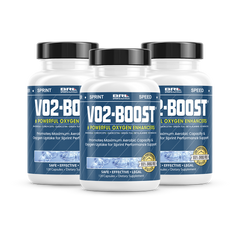
VO2 Boost — Built for Endurance Athletes
Formulated to support maximal oxygen uptake, VO2 Boost helps athletes push harder, recover faster, and perform at their aerobic ceiling. Trusted by endurance athletes across running, cycling, and triathlon.
Shop VO2 Boost →
VO2 Max: How to Increase It With Environment and Recovery
Beyond training and nutrition, your environment and recovery habits play an important role in how well your body adapts. Supporting your cardiovascular system outside of workouts can give you an added edge and help your VO2 max progress more efficiently.
Altitude and Oxygen Adaptation
Training at altitude or simulating altitude exposure can stimulate red blood cell production, which improves the blood’s ability to carry oxygen. Over time, this leads to better endurance and aerobic performance. Tools like Altitude Boost offer a practical way to promote this effect without needing to live or train at high elevations. By increasing oxygen delivery, your body becomes more efficient during hard efforts at sea level.
The Importance of Quality Recovery
VO2 max improvements depend on how well your body recovers from training. During rest, your cardiovascular system rebuilds and adapts to the demands placed on it. Poor sleep, high stress, or frequent overtraining can interrupt this process. Consistent rest, balanced training loads, and active recovery days allow your heart and lungs to become stronger over time.
Keeping Core Temperature in Check
Environmental conditions, especially heat, can put extra strain on your cardiovascular system. When your body overheats, more blood is redirected to the skin to help cool you down, leaving less available for muscle performance. Managing core temperature helps keep your training effective. For more on this topic, read our blog on Core Temperature: Why Staying Cool Matters.

How Long Does It Take to Increase VO2 Max?
Improving VO2 max is a gradual process. For most people, measurable changes begin to appear within four to six weeks of consistent, focused training. However, the rate of improvement depends on several factors, including your current fitness level, training intensity, and how well your recovery and nutrition support the process.
Beginners often see faster gains because their bodies are adapting to a new stimulus. For trained athletes, the improvements may come more slowly, but even small increases can lead to better endurance and performance. Consistency matters more than intensity alone. Training that includes structured intervals, aerobic volume, and recovery periods creates the right conditions for your cardiovascular system to adapt.
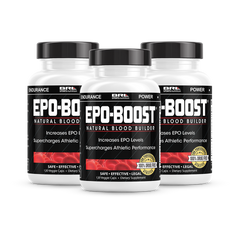
Supplements that support red blood cell production and oxygen delivery may also help accelerate this process. EPO-Boost is one example of a supplement designed to naturally support VO2 max over time by promoting endurance-specific adaptations.
The Fastest Ways to Increase VO2 Max
If you're looking for the fastest way to increase VO2 max, the answer comes down to stacking the right stimuli — not just training harder. Athletes who combine high-intensity intervals with altitude adaptation and targeted supplementation see measurable gains faster than those relying on training volume alone. Here's what the research and field data point to as the highest-ROI methods for rapid improvement.
1. High-Intensity Intervals at VO2 Max Intensity
The fastest training stimulus for VO2 max is time spent at or near your VO2 max heart rate — typically 95–100% of max HR. Workouts like 4x4 intervals (four minutes at near-maximal effort, four minutes recovery, repeated four times) have the strongest evidence base for rapid VO2 max gains. Three sessions per week over four weeks produces measurable improvements in most trained athletes. Anything less than 3 minutes per interval won't generate the sustained cardiovascular stress needed to trigger adaptation.
2. Altitude Exposure or Simulation
Altitude triggers EPO production — your body's natural response to reduced oxygen — which increases red blood cell count and oxygen-carrying capacity. Live-high train-low protocols produce the fastest results, but athletes without altitude access can use supplements like Altitude Boost to support similar physiological adaptations at sea level. Even two to three weeks of altitude exposure produces measurable VO2 max increases that persist for weeks after return.
3. Targeted Supplementation
The quickest way to increase VO2 max without additional training stress is to support the physiological drivers directly. EPO Boost supports natural erythropoietin production, increasing the blood's oxygen-carrying capacity. VO2 Boost targets oxygen utilization at the muscle level, improving how efficiently working muscles extract and use delivered oxygen. Used together alongside structured training, they address both sides of the VO2 max equation — delivery and utilization.
Stack VO2 Boost + EPO Boost for Maximum Aerobic Gains
VO2 Boost targets oxygen utilization. EPO Boost supports oxygen delivery. Together they address both physiological drivers of VO2 max — making your training more productive and your adaptations faster.
Shop VO2 Boost → | Shop EPO Boost →
4. The Combination Approach
The fastest VO2 max gains come from stacking all three: high-intensity intervals to drive cardiovascular adaptation, altitude exposure or simulation to increase red blood cell production, and supplementation to support oxygen delivery and utilization. Most athletes following this protocol see measurable improvements within three to four weeks — compared to six to eight weeks on training alone.
Common Mistakes That Limit VO2 Max Gains
Even with solid training and smart planning, certain habits can prevent VO2 max from improving as expected. These mistakes are often easy to overlook but can hold back progress if left unaddressed.
Inconsistent Training
VO2 max responds best to regular, progressive training. Skipping workouts or training without a plan makes it harder for the cardiovascular system to adapt. Sporadic efforts don’t provide the consistent stress needed to trigger meaningful improvement.
Overtraining Without Recovery
Pushing too hard without giving your body time to recover can stall progress. Without rest, the body remains in a stressed state, making it difficult to rebuild and adapt. Signs like poor sleep, heavy legs, or declining performance are often indicators that you need more recovery time.
Ignoring Low-Intensity Work
Some athletes focus only on high-intensity intervals, assuming that more intensity equals faster gains. But low- to moderate-intensity sessions help build aerobic base and improve overall efficiency. This is where zone 2 training plays a critical role, supporting mitochondrial development and long-term VO2 max improvements. Skipping these can leave a gap in endurance development and slow down VO2 max progress.

Final Thoughts: Staying Consistent and Smart
Improving your VO2 max is not about doing one thing perfectly. It’s about combining consistent training, smart recovery, supportive nutrition, and the right environmental tools. Each element plays a role in how well your cardiovascular system adapts and improves over time. With patience and structure, most athletes will see progress in both performance and endurance.
Whether you’re new to structured training or looking to fine-tune your program, the key is to stay consistent and listen to your body. Small, steady improvements often lead to lasting results. The right tools and support can help you get there more efficiently.
Read also:
- Ice Baths vs. Saunas: Your Next Recovery and Performance Hack
- Race-Day Energy and Post-Race Repair: The Ultimate Carb/Protein Blueprint
- The Power of Professional Bike Fitting: Your Key to Comfort and Performance
Frequently Asked Questions About VO2 Max Supplements
What is VO2 max and why does it matter?
VO2 max is the maximum rate at which your body can consume oxygen during intense exercise, expressed in mL/kg/min. It is the gold-standard measure of aerobic fitness and a strong predictor of endurance performance in running, cycling, triathlon, and other aerobic sports. A higher VO2 max means your muscles can receive and use more oxygen, enabling faster sustained speeds.
How can I increase my VO2 max naturally?
VO2 max responds best to high-intensity interval training (HIIT), tempo runs, and zone 4–5 efforts. Consistent aerobic base training raises it over time. Natural supplements that support EPO production (EPO Boost, $59.95), oxygen utilization (VO2 Boost, $59.95), and altitude adaptation (Altitude Boost, $44.95) can complement a well-structured training program.
How long does it take to improve VO2 max?
Measurable improvements occur within 4–8 weeks of consistent training. Less-trained athletes see larger percentage gains. Altitude training, high-intensity intervals, and EPO/VO2 support supplementation can accelerate the rate of improvement.
What supplements help increase VO2 max?
Natural EPO-boosting compounds (EPO Boost) support red blood cell production and oxygen delivery. VO2 Boost improves the efficiency with which muscles utilize that oxygen. Altitude Boost stimulates altitude-type physiological adaptations. Together, these three products address the primary physiological drivers of VO2 max.
Does altitude training improve VO2 max?
Yes. Altitude training stimulates EPO production and red blood cell increases in response to reduced oxygen. When athletes return to sea level, this elevated oxygen-carrying capacity translates to improved VO2 max. BRL Sports Altitude Boost ($44.95 / $40.46 subscribe) is designed to help athletes who cannot access altitude simulate some of these adaptations at sea level.
What is a good VO2 max for an endurance athlete?
For recreational endurance athletes, 45–55 mL/kg/min is good to excellent. Elite endurance athletes typically range from 60–80+ mL/kg/min. Elite male cyclists and cross-country skiers have recorded values above 90. VO2 max is trainable — consistent aerobic training combined with targeted supplementation can produce meaningful improvements at any starting level.
How does EPO affect VO2 max?
EPO (erythropoietin) stimulates red blood cell production, increasing the blood's oxygen-carrying capacity. More red blood cells mean more oxygen delivered to working muscles, directly raising VO2 max. BRL Sports EPO Boost ($59.95 / $53.96 subscribe) supports the body's natural EPO production pathways using legal, natural ingredients — no synthetic EPO, no prohibited substances.
Frequently Asked Questions About How to Increase Vo2 Max
What is considered a good VO2 max for endurance athletes?
A good VO2 max varies by sport, age, and gender. For trained male endurance athletes, 60–70 ml/kg/min is common. For females, 50–60 ml/kg/min is a strong range.
Does VO2 max decrease with age?
Yes, VO2 max naturally declines over time. On average, it drops about 1% per year after age 30 if no training adjustments are made. Consistent aerobic training can slow this decline.
Can walking improve VO2 max?
Brisk walking may slightly improve VO2 max in beginners, but for trained individuals, more intense efforts like intervals or tempo runs are needed for further gains.
Is VO2 max linked to heart health?
Yes, a higher VO2 max is often associated with better cardiovascular health. It reflects how efficiently your heart pumps oxygenated blood during exercise.
Can genetics limit how much you can increase VO2 max?
Genetics do play a role in your VO2 max potential, but most people can still improve it significantly with the right training and recovery approach.
How often should I test my VO2 max?
Every 6 to 8 weeks is a practical window if you're actively training to improve it. This allows enough time to see meaningful progress.
Are VO2 max readings from smartwatches accurate?
They can give a general estimate, but they’re not as accurate as lab testing. Use them to track trends over time rather than focusing on the specific number.
Can breathing exercises help increase VO2 max?
While they won’t directly raise VO2 max, breathing exercises can improve respiratory efficiency, which may support better oxygen use during workouts.
Does hydration affect VO2 max?
Yes, dehydration can reduce blood volume and limit oxygen delivery, which may negatively affect your VO2 max during training or testing.
Is VO2 max more important than lactate threshold?
Both matter. VO2 max reflects your aerobic capacity, while lactate threshold shows how well you can sustain effort. Improving both leads to better performance.
What is the fastest way to increase VO2 max?
The fastest approach combines high-intensity intervals at near-maximal effort (4x4 protocol, three sessions per week), altitude exposure or simulation to drive EPO production, and targeted supplementation that supports oxygen delivery and utilization. Athletes using all three simultaneously typically see measurable VO2 max gains within three to four weeks.
Sources:
- Bacon, A. P., Carter, R. E., Ogle, E. A., & Joyner, M. J. (2013). VO2max Trainability and High Intensity Interval Training in Humans: A Meta-Analysis. PLoS ONE, 8(9), e73182. https://doi.org/10.1371/journal.pone.0073182
- Ito, G., Feeley, M., Sawai, T., Nakata, H., Otsuki, S., Nakahara, H., & Miyamoto, T. (2024). High-intensity interval training improves respiratory and cardiovascular adjustments before and after initiation of exercise. Frontiers in Physiology, 15. https://doi.org/10.3389/fphys.2024.1227316