

Key Takeaways:
- Different Purposes: Pre-workouts and VO2 boosters may target different exercise demands, although their ingredients and intended effects can overlap.
- Caffeine Evidence: Caffeine can improve certain endurance outcomes, but increased alertness does not necessarily indicate improved VO2 max.
- Ingredient Transparency: Evaluating a supplement's ingredients, stimulant content, and supporting research is more useful than relying on marketing terminology.
Is a natural pre workout supplement the same as a VO2 booster? Not necessarily. Pre-workouts commonly target short-term exercise performance, while VO2-focused formulations may emphasize ingredients studied for aerobic capacity, fatigue resistance, and endurance. The distinction depends on the ingredients and supporting evidence, not the product name.
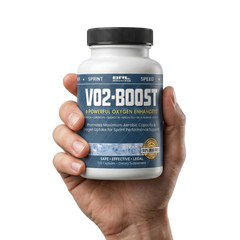
BRL Sports takes an ingredient-focused approach to endurance supplementation, emphasizing research-informed formulations and product quality. Its VO2-Boost formulation provides an example of how ingredients can be selected around different exercise-related physiological processes rather than a single performance outcome.
This article compares pre-workouts and VO2 boosters, examines caffeine's role in endurance performance, and explains how athletes can assess supplement labels before choosing a product.

What Is the Difference Between a Pre-Workout and a VO2 Booster?
The main difference between a pre-workout and a VO2 booster is their intended focus. Pre-workouts commonly emphasize immediate exercise performance, while VO2-focused supplements may contain ingredients investigated for oxygen utilization, aerobic metabolism, and endurance-related processes.
A natural pre workout supplement may use plant-derived stimulants or other performance-supporting compounds. However, natural ingredients do not automatically make a product stimulant-free, and the term “natural” does not establish its effectiveness.
Immediate Performance vs. Aerobic Capacity
Conventional pre-workouts often combine ingredients intended to support energy, focus, or high-intensity exercise. Some have evidence for specific performance benefits, but these effects should not be confused with increases in VO2 max.
VO2 max measures the body's maximum rate of oxygen consumption during intense exercise. Improving it generally requires appropriate training, and a supplement marketed as a VO2 booster does not necessarily produce measurable improvements.
The pre workout vs vo2 booster distinction becomes clearer when athletes examine individual ingredients rather than product names. The Creatine vs pre workout comparison illustrates why different supplement categories should be evaluated according to their intended performance outcomes.
Ultimately, the label “VO2 booster” describes a product's positioning, not proof of an increase in aerobic capacity.
What Does Caffeine Actually Do for Endurance Performance?
Caffeine can improve endurance performance by influencing alertness, perceived exertion, and the nervous system's response to exercise. Its effects are supported by human research, although individual responses vary.
The main performance-related effects include:
- Increased alertness and focus: Caffeine stimulates the central nervous system, helping athletes maintain attention during demanding training sessions and endurance events.
- Reduced perceived exertion: Some athletes experience a lower sense of effort at a given workload, which may help them sustain exercise intensity.
- Improved endurance performance: Research supports caffeine's ability to improve certain endurance outcomes, including time-trial performance, without necessarily increasing VO2 max.
A caffeine pre workout supplement may provide these benefits through its stimulant effects. Similarly, a natural stimulant supplement can contain plant-derived caffeine, making ingredient identity and total caffeine content important considerations.
The Caffeine and sport performance resource explores caffeine's exercise-related effects, while L-Theanine and caffeine cognitive performance provides context on another ingredient studied for cognitive function.
Athletes should also consider timing, tolerance, and total intake, particularly during prolonged events. The Caffeine considerations for endurance events resource addresses these practical factors.
Caffeine can support endurance performance, but its stimulant effects should not be mistaken for evidence that a supplement increases aerobic capacity.

What Should Athletes Look for on an Endurance Supplement Label?
Athletes should evaluate an endurance supplement by examining its ingredients, stimulant content, and supporting research rather than relying on claims about energy or oxygen utilization. A product marketed as a VO2 booster is not necessarily formulated to improve VO2 max.
Ingredient Transparency and Intended Benefits
An endurance supplement ingredients label should help athletes identify what the formula contains and whether its ingredients align with their training goals.
Three factors deserve particular attention:
- Clearly identified ingredients: Look for recognizable ingredient names and disclosed amounts where available. This makes it easier to assess whether a formulation reflects doses studied in human research.
- Stimulant content: Check for caffeine and other stimulants, including those supplied through botanical extracts. A product's natural positioning does not guarantee the absence of stimulants.
- Evidence relevant to endurance: Distinguish ingredients studied for immediate performance effects from those investigated for aerobic metabolism, fatigue resistance, or exercise-related physiological processes.
These criteria help athletes assess whether a supplement's marketing matches its formulation.
The VO2-Boost ingredient breakdown provides a closer look at the ingredients selected for BRL Sports' endurance-focused formula. Reviewing individual ingredients and their proposed functions offers a more meaningful starting point than judging a product by its name alone.
A well-informed supplement choice begins with understanding what each ingredient is intended to support and whether the available evidence matches that purpose.

Final Thoughts
A natural pre workout supplement and a VO2 booster may share certain ingredients, but their intended benefits are not always the same. Caffeine can support alertness and endurance performance, while other compounds are investigated for their roles in aerobic metabolism and exercise-related physiological processes.
BRL Sports approaches endurance supplementation through research-informed ingredient selection, with VO2-Boost reflecting an emphasis on ingredients relevant to sustained exercise. Rather than relying on promises of immediate energy or increased oxygen uptake, athletes can make more informed choices by examining ingredient transparency, scientific evidence, and their individual training goals.
The most useful distinction is not how a supplement is marketed, but what its ingredients can reasonably be expected to support.
Frequently Asked Questions About Natural Pre Workout Supplement
Is a natural pre-workout supplement better than a conventional pre-workout?
Not necessarily. Effectiveness depends on the ingredients, their amounts, and the athlete's training goals. Natural formulations may contain plant-derived compounds, but natural origin alone does not establish superior performance benefits or safety.
Can a pre-workout supplement increase VO2 max?
A pre-workout may improve certain exercise outcomes, but that does not mean it increases VO2 max. Aerobic training remains the primary method for improving maximal oxygen uptake, and supplement claims should be supported by human performance studies.
Are all VO2 boosters caffeine-free?
No. VO2 boosters are not a standardized supplement category, so formulations vary. Some may contain caffeine or other stimulants, while others emphasize non-stimulant ingredients. Checking the product label is the most reliable way to identify stimulant content.
What ingredients should endurance athletes look for in supplements?
Ingredient selection depends on the intended benefit. Caffeine has evidence for improving certain endurance outcomes, while dietary nitrates have been studied for exercise efficiency and performance. Athletes should consider ingredient amounts, research quality, and relevance to their sport.
Can athletes combine a VO2 booster with a pre-workout?
Combining products may be possible, but athletes should first check for overlapping ingredients and excessive stimulant intake. Using multiple supplements does not guarantee additional benefits, particularly when formulations contain similar compounds.
Does feeling more energized mean a supplement is improving endurance?
No. Increased alertness or reduced fatigue perception can make exercise feel more manageable, but these sensations do not independently demonstrate improvements in aerobic capacity, oxygen utilization, or long-term endurance adaptations.
When should athletes take an endurance supplement?
Timing depends on the ingredients and intended effects. Caffeine is often consumed before exercise, while other ingredients may follow different protocols. Athletes should evaluate product-specific instructions and avoid assuming every endurance ingredient works immediately.
How can athletes tell whether a supplement's performance claims are credible?
Look for clearly disclosed ingredients, relevant human studies, and claims tied to measurable outcomes. Evidence for an individual ingredient does not automatically establish that the finished product produces the same effects.
Sources:
- Guest, N. S., VanDusseldorp, T. A., Nelson, M. T., Grgic, J., Schoenfeld, B. J., Jenkins, N. D. M., Arent, S. M., Antonio, J., Stout, J. R., Trexler, E. T., Smith-Ryan, A. E., Goldstein, E. R., Kalman, D. S., & Campbell, B. I. (2021). International society of sports nutrition position stand: Caffeine and exercise performance. Journal of the International Society of Sports Nutrition, 18, Article 1. https://doi.org/10.1186/s12970-020-00383-4
- Maughan, R. J., Burke, L. M., Dvorak, J., Larson-Meyer, D. E., Peeling, P., Phillips, S. M., Rawson, E. S., Walsh, N. P., Garthe, I., Geyer, H., Meeusen, R., van Loon, L. J. C., Shirreffs, S. M., Spriet, L. L., Stuart, M., Vernec, A., Currell, K., Ali, V. M., Budgett, R. G., ... Engebretsen, L. (2018). IOC consensus statement: Dietary supplements and the high-performance athlete. British Journal of Sports Medicine, 52(7), 439–455. https://doi.org/10.1136/bjsports-2018-099027
- Southward, K., Rutherfurd-Markwick, K. J., & Ali, A. (2018). The effect of acute caffeine ingestion on endurance performance: A systematic review and meta-analysis. Sports Medicine, 48(8), 1913–1928. https://doi.org/10.1007/s40279-018-0939-8