


Key Takeaways:
- Distance Changes the Stack: A 5K runner and marathoner do not have identical fueling demands, so supplement choices should reflect race duration and training needs.
- Fueling Becomes More Important: As races get longer, carbohydrates, fluids, and electrolytes become increasingly important parts of the overall performance strategy.
- More Isn't Automatically Better: Endurance supplement stacking should focus on a specific purpose for each component rather than using the largest possible combination of products.
A 5K and a marathon test runners in very different ways, so why would the supplement strategy stay the same? Shorter races place greater emphasis on sustaining a hard effort, while longer distances progressively increase the importance of carbohydrate availability, hydration, electrolytes, and recovery. The best supplements by race distance should reflect those changing demands rather than simply adding more products as the mileage increases.
BRL Sports has focused on endurance performance since 2008, developing science-based formulas for athletes who train and compete seriously. Founded by bioengineers from UC San Diego, we build formulations around researched ingredients and use third-party testing for quality, label accuracy, and banned substances. Our endurance lineup also spans distinct performance needs, from oxygen utilization and training support to carbohydrates, electrolytes, and recovery nutrition.
In this listicle, we'll build a running supplement stack from the 5K through the marathon, showing what becomes relevant as race duration increases and where supplements fit alongside training, nutrition, hydration, and race-day fueling.

5K: Keep Your Supplement Stack Focused
A 5K may be the shortest distance on this list, but its intensity means runners can spend much of the race working at a high percentage of their aerobic capacity. The supplement strategy should reflect that reality. For most runners, the priority is not carrying an extensive race-day fueling stack. It is supporting the training that develops aerobic fitness, running economy, and the ability to maintain pace.
That makes a 5K running supplement stack different from what we will build for longer distances. Carbohydrates and hydration still matter before the event, but fueling during a typical 5K is generally less central than it becomes in half-marathon and marathon racing. Supplements should complement a well-developed training program rather than compensate for one.
For runners focused on improving aerobic performance, VO2 max is one useful piece of the performance picture. Training remains the primary stimulus, and strategies such as intervals, tempo work, and appropriate training volume can contribute to aerobic development. Our breakdown of How to Increase VO2 Max: 12 Proven Endurance Methods examines those approaches in more detail.
5K stack priority: Keep it lean. Focus on supplements that have a defined role in supporting training or an identified nutritional need, while leaving extensive in-race fueling strategies for the longer distances where they become more relevant.
10K: Support Sustained Performance
The move from 5K to 10K doubles the distance, but it does not mean runners should automatically double their supplement stack. The emphasis remains on supporting the training adaptations that help runners sustain a demanding pace, with aerobic capacity, running economy, and fatigue resistance becoming increasingly important.
This is where VO2 Boost Sports Performance Enhancer can fit into a training-focused strategy. BRL positions VO2 Boost around supporting VO2 max, oxygen utilization, exercise capacity, endurance, and recovery between efforts. Its role is better viewed as part of consistent training support rather than a last-minute supplement taken to transform race-day performance.
For many 10K runners, extensive during-race fueling still does not need to be the centerpiece. Instead, the stack should remain purposeful: address specific training or nutritional needs, arrive adequately fueled and hydrated, and avoid adding products simply because the race distance has increased.
10K stack priority: Build on the 5K foundation with targeted support for sustained aerobic performance. Save the more deliberate carbohydrate and electrolyte strategies for the longer events where time on course makes them increasingly relevant.
Half Marathon: Add Fueling to the Stack
The half marathon is where the stack begins to shift. Runners are spending considerably longer on course, making carbohydrate availability, fluid intake, and electrolytes more relevant to race execution. The goal is not to carry every possible supplement, but to add fueling strategies that match the duration and conditions of the event.
TriFuel Energy Performance and Recovery Sports Drink fits naturally at this distance because its formula combines carbohydrates with sodium, potassium, magnesium, BCAAs, and other ingredients. BRL positions it to replenish fluids and electrolytes lost during exercise while providing carbohydrate fuel for sustained activity.
Unlike a shorter race, a half marathon may require runners to think about what they consume while moving. Individual needs vary with pace, weather, sweat rate, and what the athlete can comfortably tolerate, so any carbohydrate or hydration strategy should be tested during long training runs rather than introduced on race morning.
Half marathon stack priority: Carry forward relevant training support, then add a practiced carbohydrate, fluid, and electrolyte plan when race duration warrants it. This is where endurance supplement stacking starts to include deliberate in-race fueling rather than focusing primarily on training support.

Marathon: Build the Complete Endurance Supplement Stack
At marathon distance, supplements and sports nutrition have more jobs to perform. Runners need to think beyond general training support and plan how carbohydrates, fluids, electrolytes, and recovery nutrition fit across months of preparation and several hours of racing. The most useful marathon supplements are therefore those with a defined role in the overall plan.
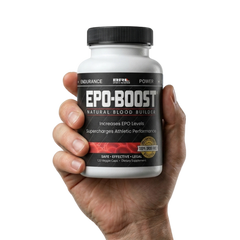
Training support comes first. EPO Boost Natural Blood Builder is positioned by BRL Sports as a drug-free endurance formula supporting oxygen utilization, stamina, endurance, and recovery. Its ingredients include rhodiola, cordyceps, quercetin, beta-alanine, and echinacea. This makes it more appropriate to discuss as part of an endurance-training routine than as an in-race source of carbohydrates or electrolytes.
Race fueling has a different purpose. During a marathon, carbohydrate intake helps provide fuel for prolonged exercise, while fluids and electrolytes need to account for individual needs, conditions, pace, and tolerance. These strategies should be rehearsed during long runs so runners know what they can consume comfortably at race intensity. The Marathon Training Nutrition Guide for Every Phase provides the broader nutrition context for preparation across the training cycle.
Recovery completes the stack. After prolonged running, the priorities shift toward replacing fluids, replenishing carbohydrate stores, and providing protein to support muscle recovery. Rather than treating endurance supplement stacking as a collection of products taken at once, marathoners can organize each component around when and why it is needed.
Marathon stack priority: Think in phases: support training, arrive properly fueled, execute a practiced race nutrition strategy, and address recovery afterward. That makes a marathon supplement guide more useful than simply naming a long list of products.
Compare the Best Supplements by Race Distance
The best supplements by race distance are easier to understand as a progression. Each step up in distance introduces different demands, but that does not mean starting over with an entirely new stack.
5K → Performance
Keep the stack focused. Training quality, aerobic development, and adequate everyday nutrition matter more than building an elaborate race-day fueling protocol.
10K → Sustained Performance
The foundation remains similar, but the ability to maintain aerobic output for longer becomes more important. Targeted training support may have a role, while extensive during-race fueling is still unlikely to be the defining part of the stack for many runners.
Half Marathon → Performance + Fueling
Now the equation changes. Longer time on course makes carbohydrate intake, fluids, and electrolytes more relevant, depending on pace, conditions, and individual needs. The stack begins to include a deliberate race-fueling component.
Marathon → Performance + Fueling + Recovery
The marathon brings the complete progression together. Training support is only one piece. Runners also need a practiced carbohydrate and hydration strategy for the race itself, followed by nutrition that supports replenishment and recovery after the finish.
The pattern is simple: 5K performance → 10K sustained performance → half-marathon fueling → marathon fueling and recovery. A longer race does not automatically require more supplements. It requires a more complete strategy for the demands that become relevant as time on course increases.
How to Build Your Running Supplement Stack
A running supplement stack should start with the demands of the race and the gaps in your existing nutrition, not with the number of products you can combine. Supplements have different jobs, so deciding what you need is more useful than assembling the same stack for every training block and race.
Start with the purpose. Is the goal to support aerobic training, maintain energy during prolonged running, replace fluids and electrolytes, or support recovery? A product should earn its place by addressing a defined need rather than being included simply because it is marketed to endurance athletes.
Separate training support from race fuel. Products intended to complement endurance training serve a different role from carbohydrates, fluids, and electrolytes consumed during prolonged exercise. Keeping those categories separate also makes it easier to determine what belongs in everyday preparation and what needs to be carried or consumed on race day.
Test before you race. Any supplement or fueling product intended for competition should first be used during appropriate training sessions. This allows runners to assess serving size, timing, taste, and gastrointestinal tolerance without introducing another unknown on race day.
As distance increases, the stack can become more comprehensive, but it should remain purposeful. The goal is not to create the longest possible supplement routine. It is to build one in which every component has a clear reason for being there.

Final Thoughts
The right supplement strategy changes as race distance increases. A 5K places more emphasis on supporting high-intensity aerobic performance, while the 10K extends that demand. By the half marathon, planned fueling and hydration become increasingly relevant, and the marathon requires runners to coordinate training support, race nutrition, and recovery.
That is why marathon supplements should be selected by purpose rather than quantity. A supplement intended to support endurance training does a different job from carbohydrates and electrolytes used during prolonged exercise, and neither replaces consistent training or adequate everyday nutrition.
The most effective approach is one you have already tested. Match each component to the demands of your distance, practice the strategy during training, and arrive on race day knowing exactly what belongs in your stack and why.
Frequently Asked Questions About Marathon Supplements
Do runners need supplements for a 5K?
Not necessarily. Many runners can meet their 5K needs through appropriate training and everyday nutrition, while supplements may have a role when they address a specific nutritional or training need.
Are supplements more important for a marathon than a 5K?
Race nutrition generally becomes more complex as distance and time on course increase. Marathon runners need to plan for prolonged carbohydrate and fluid needs in ways that usually are not necessary during a 5K.
Should runners take all their supplements on race morning?
No. Some supplements are intended for consistent use during a training period rather than providing an immediate race-morning effect. Race-day nutrition should be limited to products, foods, fluids, and timing strategies already tested in training.
Can you combine multiple running supplements?
Yes, but each component should have a clear purpose and compatible ingredients. Check serving sizes and overlapping ingredients rather than assuming that combining more products will produce better results.
Should supplement use change during a training cycle?
It can. Training volume, workout intensity, race distance, nutrition, and recovery demands can change throughout a training block, so the same supplement strategy may not be necessary at every stage.
How far before a race should you test a new supplement?
Test new supplements during training rather than for the first time close to or on race day. This gives you an opportunity to evaluate tolerance and determine whether the product fits your routine before competition.
Can supplements replace gels or sports drinks during a marathon?
Not if the supplement does not provide the carbohydrate, fluid, or electrolytes required by your fueling plan. Training-support supplements and in-race nutrition serve different purposes, so runners should check what a product actually provides.
How do you know whether a supplement belongs in your race plan?
Start by identifying the specific need it is supposed to address. Then consider the product's ingredients, intended use, evidence, timing, and how well you tolerate it before deciding whether it belongs in your training or race routine.
Sources:
-
Peeling, P., Binnie, M. J., Goods, P. S. R., Sim, M., & Burke, L. M. (2018). Evidence-based supplements for the enhancement of athletic performance. International Journal of Sport Nutrition and Exercise Metabolism, 28(2), 178–187. https://doi.org/10.1123/ijsnem.2017-0343
-
Wilson, P. B. (2016). Does carbohydrate intake during endurance running improve performance? A critical review. Journal of Strength and Conditioning Research, 30(12), 3539–3559. https://doi.org/10.1519/JSC.0000000000001430
-
Ramos-Campo, D. J., et al. (2024). The ergogenic effects of acute carbohydrate feeding on endurance performance: A systematic review, meta-analysis and meta-regression. Critical Reviews in Food Science and Nutrition, 64(24), 8786–8798. https://doi.org/10.1080/10408398.2023.2233633