

Key Takeaways:
- Athletic Performance: Quercetin has been studied for its potential to support endurance and exercise tolerance, although results differ across human studies.
- Mitochondrial Health: Laboratory and animal research suggests quercetin may influence pathways involved in mitochondrial biogenesis, but comparable effects in trained humans remain uncertain.
- Exercise Recovery: Quercetin's antioxidant and anti-inflammatory properties provide a rationale for recovery research, though improvements in soreness and recovery time are not consistently demonstrated.
Can quercetin benefits extend to endurance performance and exercise recovery? Quercetin is a plant-derived flavonoid studied for its antioxidant activity, effects on cellular energy metabolism, and potential role in managing exercise-related stress. Research suggests several promising applications, although results in athletes vary.
BRL Sports develops research-informed sports supplements with an emphasis on ingredient selection and quality testing. Its interest in quercetin reflects growing scientific attention to compounds that may influence exercise adaptation, fatigue, and recovery.
This article examines the potential benefits of quercetin for athletes, its relationship with mitochondrial health and endurance, and what human research reveals about exercise recovery.

What Are the Benefits of Quercetin for Athletes?
Quercetin benefits for athletes center on its antioxidant and anti-inflammatory activity, alongside its potential influence on exercise performance. This naturally occurring flavonoid is found in foods such as onions, apples, and berries and has been investigated for its effects on physical stress.
During strenuous exercise, the body produces reactive oxygen species. These molecules contribute to normal training adaptations, but excessive oxidative stress may also affect cellular function. Quercetin has been studied for its ability to influence oxidative stress and inflammatory signaling, making it relevant to sports nutrition research.
For athletes, three potential benefits stand out:
- Cellular protection: Quercetin may help regulate oxidative stress associated with demanding exercise.
- Exercise tolerance: Some human studies suggest modest improvements in endurance capacity, although findings are inconsistent.
- Recovery support: Its effects on inflammatory pathways have prompted research into post-exercise recovery.
The Quercetin ingredient profile provides additional context on its proposed functions.
These properties explain the scientific interest in quercetin for athletes, particularly as part of a broader approach to training, nutrition, and recovery.
How Does Quercetin Affect Mitochondrial Health and Endurance?
Quercetin may influence mitochondrial function through pathways involved in cellular energy production, but its effects on endurance performance in humans remain mixed.
Mitochondria produce ATP, the energy required for muscle contraction. Research suggests quercetin may influence signaling pathways associated with mitochondrial biogenesis, including PGC-1α, a regulator of mitochondrial development. Much of this evidence comes from animal and laboratory studies, so improvements in quercetin mitochondrial health cannot yet be assumed in trained athletes.
Human research provides a more practical perspective. Some studies have reported modest improvements in aerobic capacity or exercise tolerance following quercetin supplementation. However, results vary with training status, supplementation protocols, and the performance measures used. BRL Sports examines these findings in its article, Does quercetin enhance endurance?.
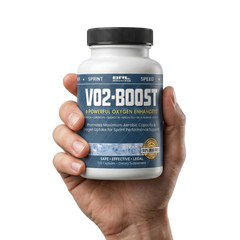
These findings make quercetin endurance research relevant to sports supplementation. Quercetin is also among the ingredients featured in BRL Sports' VO2-Boost ingredient breakdown, alongside compounds investigated for other exercise-related functions.
Its inclusion reflects a research-informed approach to ingredient selection, although evidence from individual quercetin studies does not establish the performance effects of the complete formulation.

Can Quercetin Support Exercise Recovery?
Quercetin may support exercise recovery by influencing oxidative stress and inflammatory responses following strenuous activity. However, human studies have not consistently demonstrated faster muscle recovery or reduced soreness.
Intense training places stress on muscle tissue and triggers inflammation as part of the normal repair process. Quercetin's antioxidant and anti-inflammatory properties have prompted researchers to investigate whether supplementation can help manage excessive exercise-related stress without interfering with beneficial training adaptations.
Research into quercetin exercise recovery has examined several outcomes:
- Muscle soreness: Some studies suggest potential benefits, but reductions in post-exercise soreness are not consistently observed.
- Inflammatory responses: Quercetin may influence certain inflammatory markers, although changes in these markers do not necessarily indicate faster recovery.
- Muscle function: Evidence that supplementation consistently restores strength or performance after demanding exercise remains limited.
For athletes, quercetin is best considered within a broader recovery strategy that prioritizes nutrition, sleep, and appropriate training loads. BRL Sports provides additional context in its running recovery supplements guide and collection of best supplements for muscle recovery.

Final Thoughts
Quercetin benefits for athletes extend beyond its antioxidant properties, with research investigating its potential roles in mitochondrial function, endurance, and exercise recovery. Although human findings vary, these areas provide a scientific basis for continued interest in quercetin as a sports nutrition ingredient.
For athletes considering supplementation, quercetin offers a research-informed option worth evaluating alongside established training, nutrition, and recovery practices. Its potential value depends on the intended performance goal, appropriate dosage, and the quality of supporting evidence.
Frequently Asked Questions About Quercetin Benefits
Is quercetin more beneficial for endurance or strength athletes?
Quercetin has been studied more extensively for aerobic performance and exercise-related oxidative stress. Strength athletes may also find its recovery-related research relevant, but consistent improvements in strength or muscle growth have not been established.
What foods naturally contain quercetin?
Quercetin occurs naturally in onions, apples, berries, capers, and leafy vegetables. The amount varies by food type, growing conditions, and preparation methods.
How much quercetin should athletes take?
There is no universally established quercetin dosage for athletic performance. Human studies have used different amounts and supplementation periods, making it important to distinguish research protocols from product-specific directions.
How long does quercetin take to show potential benefits?
Research has examined both short-term and multiweek supplementation. The timeframe depends on the outcome being measured, and no consistent period has been established for noticeable endurance or recovery improvements.
Does quercetin work better when combined with vitamin C?
Vitamin C is sometimes included in quercetin formulations, but evidence that the combination consistently improves athletic performance or recovery is insufficient. Benefits should not be assumed simply because both compounds have antioxidant properties.
Can quercetin reduce muscle damage after intense exercise?
Some studies have investigated quercetin's effects on markers associated with exercise-induced muscle damage. Findings vary, and changes in blood markers do not necessarily indicate faster restoration of muscle function.
Is quercetin safe for daily use?
Quercetin occurs naturally in foods and has been studied in supplemental forms. However, long-term safety data for high-dose supplementation are limited, and quercetin may interact with certain medications. Athletes should follow product directions and seek professional guidance when appropriate.
Can quercetin replace a balanced recovery routine?
No. Adequate sleep, nutrition, hydration, and appropriate training loads remain fundamental to exercise recovery. Quercetin should be evaluated as a possible addition to these practices rather than a substitute.
Sources:
- Davis, J. M., Murphy, E. A., Carmichael, M. D., & Davis, B. (2009). Quercetin increases brain and muscle mitochondrial biogenesis and exercise tolerance. American Journal of Physiology-Regulatory, Integrative and Comparative Physiology, 296(4), R1071–R1077. https://doi.org/10.1152/ajpregu.90925.2008
- Kressler, J., Millard-Stafford, M., & Warren, G. L. (2011). Quercetin and endurance exercise capacity: A systematic review and meta-analysis. Medicine & Science in Sports & Exercise, 43(12), 2396–2404. https://doi.org/10.1249/MSS.0b013e31822495a7
- Rojano-Ortega, D., Peña-Amaro, J., Berral-Aguilar, A. J., & Berral-de la Rosa, F. J. (2023). Quercetin supplementation promotes recovery after exercise-induced muscle damage: A systematic review and meta-analysis of randomized controlled trials. Biology of Sport, 40(3), 813–825. https://doi.org/10.5114/biolsport.2023.121320