

Key Takeaways:
- Endurance Performance: Some human studies suggest rhodiola rosea may improve exercise tolerance or perceived exertion, but results are inconsistent.
- Fatigue Resistance: Rhodiola has been studied for its potential effects on physical and mental fatigue, although benefits are not established across all athletic populations.
- Oxygen Delivery: Current human evidence does not establish that rhodiola increases oxygen transport to working muscles or directly improves oxygen delivery during exercise.
Can rhodiola rosea help endurance athletes resist fatigue and maintain performance during demanding exercise? Research suggests that rhodiola may influence perceived exertion and exercise tolerance, although findings vary across studies. Evidence that it directly improves oxygen delivery remains limited.
BRL Sports approaches endurance supplementation through ingredient research, formulation quality, and athlete safety. Founded in 2008 by UC San Diego bioengineers, the company incorporates research-informed ingredients such as rhodiola rosea into its performance-support formulations. Its products undergo third-party testing for quality and banned substances, reflecting an emphasis on responsible supplementation for competitive athletes.
This article examines rhodiola rosea benefits for endurance athletes, the evidence surrounding fatigue resistance, and whether supplementation affects oxygen delivery during exercise.

What Are the Benefits of Rhodiola Rosea for Endurance Athletes?
Rhodiola rosea may support exercise tolerance, reduce perceived exertion, and help athletes maintain performance during demanding activity. However, research on rhodiola rosea benefits remains mixed, with outcomes influenced by supplementation duration, extract composition, and participants' training status.
Human studies investigating rhodiola rosea endurance effects have reported several potential benefits:
- Exercise tolerance: Some trials suggest rhodiola supplementation may help participants sustain exercise for longer before exhaustion, although improvements are not consistently observed.
- Perceived exertion: Certain studies report lower ratings of perceived effort during exercise, even when measurable physiological performance improvements are limited.
- Endurance performance: Research has examined time-trial results and exercise capacity, but findings vary across study designs and athletic populations.
These findings suggest potential applications for endurance athletes without establishing rhodiola as a reliable performance enhancer. The effects of supplementation should be considered alongside training, nutrition, and recovery practices. BRL Sports' guide to stamina supplements for athletes provides additional context on ingredients studied for endurance support.
Can Rhodiola Rosea Help Reduce Fatigue During Exercise?
Rhodiola rosea may reduce perceived fatigue and exertion during exercise, although human studies have produced inconsistent results. Research on rhodiola for fatigue has examined both physical performance and mental fatigue, with some trials reporting benefits after short-term supplementation.
How Might Rhodiola Influence Fatigue?
Rhodiola is classified as an adaptogen, a term used for substances investigated for their potential effects on physiological stress responses. Its compounds, including rosavins and salidroside, have been studied for possible effects on stress-related signaling and cellular energy regulation.
For endurance athletes, three distinctions matter:
- Perceived exertion: Some participants report that exercise feels less demanding after rhodiola supplementation, even without corresponding improvements in physiological measurements.
- Physical fatigue: Certain studies suggest improvements in exercise tolerance, but evidence that rhodiola consistently delays muscular fatigue remains limited.
- Mental fatigue: Rhodiola has been investigated for its potential effects on attention and fatigue during stressful conditions, although these findings do not necessarily translate into better endurance performance.
As an adaptogen for athletes, rhodiola remains a potential supplement rather than an established solution for exercise-related fatigue. Its effects depend on the preparation studied, supplementation protocol, and outcome measured. Athletes comparing rhodiola with other ingredients can consult BRL Sports' supplements for stamina guide for broader context.

Does Rhodiola Rosea Improve Oxygen Delivery During Exercise?
Current human evidence does not establish that rhodiola rosea improves oxygen delivery to working muscles. Although some studies report improvements in exercise tolerance or perceived exertion, these outcomes do not demonstrate increased oxygen transport or more efficient oxygen use.
Oxygen delivery depends on blood flow, hemoglobin concentration, and the cardiovascular system's ability to transport oxygen to active muscles. Oxygen utilization occurs when muscle cells use that oxygen to produce energy. Research examining rhodiola oxygen delivery has investigated potential effects on cellular energy regulation and responses to exercise stress, but evidence connecting these mechanisms to measurable improvements in human oxygen transport remains insufficient.
What Does This Mean for Endurance Performance?
Rhodiola may influence how demanding exercise feels without changing the body's oxygen-delivery capacity. This distinction is important when evaluating studies that report improved time to exhaustion or reduced perceived exertion.
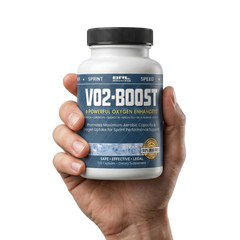
Rhodiola is included among the ingredients listed in BRL Sports' VO2-Boost ingredient breakdown, but its inclusion does not establish that the ingredient or finished formulation increases oxygen delivery.
For athletes seeking measurable aerobic improvements, structured endurance training remains the more established approach. BRL Sports' article on how to increase VO2 max discusses training methods that target aerobic capacity. Rhodiola supplementation should not be considered a substitute for those adaptations.

Final Thoughts
Rhodiola rosea benefits for endurance athletes may include reduced perceived exertion and improved exercise tolerance, but findings remain inconsistent. Research on fatigue resistance is more encouraging than evidence for increased oxygen delivery, which has not been established in human studies.
Rhodiola may have a supporting role in endurance supplementation, but it cannot replace structured training, adequate fueling, or recovery. Athletes comparing formulations can review BRL Sports' endurance supplements collection while considering ingredient research, product quality, and individual training needs.
Frequently Asked Questions About Rhodiola Rosea Benefits
How long does rhodiola rosea take to work?
Some studies have examined the effects of rhodiola rosea after a single dose, while others have evaluated supplementation over several days or weeks. There is no established timeframe for consistent endurance benefits, and results depend on the extract and outcome measured.
Is rhodiola rosea better taken before or after exercise?
Rhodiola has primarily been studied before exercise or through regular supplementation. However, research has not established an optimal dosing schedule for endurance athletes, and evidence supporting post-exercise use is limited.
What is the recommended rhodiola rosea dosage for athletes?
There is no universally established dosage for athletic performance. Human studies have used different extract concentrations and daily amounts, so findings from one preparation should not automatically guide dosing for another.
Can runners and cyclists take rhodiola rosea?
Runners and cyclists may consider rhodiola supplementation, but research has not demonstrated consistent performance improvements across these sports. Individual health considerations, product quality, and medication interactions should be assessed before use.
Does rhodiola rosea increase cortisol?
Rhodiola has been investigated for its potential effects on stress-related hormonal responses, but human evidence does not establish that it consistently increases or decreases cortisol. Results may differ according to the population, dose, and study conditions.
Is rhodiola rosea safe for daily use?
Rhodiola appears generally well tolerated in short-term human studies, but long-term safety data remain limited. Potential adverse effects and medication interactions should be considered, particularly for athletes managing existing health conditions.
Is rhodiola rosea permitted in competitive sports?
Rhodiola rosea is not generally prohibited under the World Anti-Doping Agency's prohibited list. However, supplement contamination remains a concern, so competitive athletes should prioritize independently tested products and check current anti-doping rules.
Can rhodiola rosea be combined with caffeine?
Rhodiola and caffeine may be used together, but controlled research on their combined effects in endurance athletes is limited. Their interaction has not been sufficiently studied to establish additional performance benefits or optimal dosing.
Sources:
- De Bock, K., Eijnde, B. O., Ramaekers, M., & Hespel, P. (2004). Acute Rhodiola rosea intake can improve endurance exercise performance. International Journal of Sport Nutrition and Exercise Metabolism, 14(3), 298–307. https://doi.org/10.1123/ijsnem.14.3.298
- Noreen, E. E., Buckley, J. G., Lewis, S. L., Brandauer, J., & Stuempfle, K. J. (2013). The effects of an acute dose of Rhodiola rosea on endurance exercise performance. Journal of Strength and Conditioning Research, 27(3), 839–847. https://doi.org/10.1519/JSC.0b013e31825d9799
- Ishaque, S., Shamseer, L., Bukutu, C., & Vohra, S. (2012). Rhodiola rosea for physical and mental fatigue: A systematic review. BMC Complementary and Alternative Medicine, 12, Article 70. https://doi.org/10.1186/1472-6882-12-70