

Key Takeaways:
- Endurance Potential: Cordyceps contains bioactive compounds studied for their possible effects on exercise tolerance, fatigue resistance, and aerobic performance, although human findings remain inconsistent.
- Oxygen Utilization: Research suggests cordyceps may influence physiological processes involved in cellular energy production, but these mechanisms do not guarantee improved oxygen uptake during exercise.
- VO2 Max Evidence: Some human studies report improvements in aerobic performance measures, while evidence for meaningful VO2 max gains in well-trained athletes remains limited.
Can a mushroom-derived ingredient help endurance athletes use oxygen more efficiently? Cordyceps has attracted attention for its potential effects on aerobic performance, fatigue resistance, and exercise capacity. However, research on cordyceps benefits remains mixed, particularly regarding measurable improvements in VO2 max among trained athletes. Understanding the evidence helps distinguish potential physiological effects from established performance outcomes.
BRL Sports was founded in 2008 by bioengineers from the University of California San Diego and specializes in science-based supplements for endurance athletes. The company's formulations draw on peer-reviewed research, while third-party testing supports quality, label accuracy, and banned-substance screening. This research-focused approach informs the use of ingredients such as cordyceps in endurance-support formulations.
This article examines the scientific evidence behind cordyceps, its proposed relationship with oxygen utilization, and whether supplementation can meaningfully influence VO2 max and endurance performance.

What Are the Benefits of Cordyceps for Endurance Athletes?
Cordyceps may support exercise tolerance, fatigue resistance, and aerobic performance, but research has not consistently demonstrated these benefits in trained endurance athletes. Studies investigating cordyceps for athletes have produced mixed findings, with results varying by supplement formulation, participant fitness level, and duration of use.
What Does the Research Suggest?
- Exercise tolerance: Some studies involving older or recreationally active adults have reported improvements in exercise capacity after several weeks of cordyceps supplementation.
- Fatigue resistance: Cordyceps contains compounds such as cordycepin and polysaccharides that have been investigated for their potential effects on cellular energy processes. However, evidence that these compounds meaningfully delay fatigue during competitive running remains limited.
- Aerobic performance: Certain studies have observed changes in aerobic exercise measurements, but findings are inconsistent and cannot establish a reliable performance benefit for highly trained athletes.
The Cordyceps Sinesis ingredient profile from BRL Sports discusses research involving a Cordyceps sinensis fermentation product. Such findings are relevant to understanding the ingredient's potential, although results from one preparation should not automatically be applied to every cordyceps supplement.
For athletes, cordyceps is best understood as an ingredient under investigation rather than a proven endurance enhancer. Training status, supplement composition, and the specific outcome measured all influence how applicable the available research may be.

How Does Cordyceps Affect Oxygen Utilization?
Cordyceps may influence oxygen utilization through cellular energy metabolism, but human research has not established that supplementation directly improves how efficiently muscles use oxygen during exercise. Laboratory and animal studies suggest that certain cordyceps compounds may affect pathways involved in mitochondrial function and ATP production, although these findings cannot be assumed to apply to trained athletes.
Oxygen delivery and oxygen utilization are different processes. The lungs absorb oxygen, hemoglobin carries it through the bloodstream, and muscle mitochondria use it to produce energy. Iron supports oxygen transport through its role in hemoglobin, as explained in BRL Sports' Iron and oxygen transport in blood resource. Cordyceps research primarily investigates potential effects on energy metabolism rather than demonstrating increased oxygen transport.
Studies examining cordyceps oxygen utilization have reported mixed exercise-related outcomes, and improvements in exercise capacity do not necessarily prove more efficient oxygen use. Current evidence is insufficient to establish cordyceps as a reliable method for improving oxygen utilization in endurance athletes.
Can Cordyceps Improve VO2 Max, and Why Is It in VO2-Boost?
Cordyceps may improve VO2 max in some populations, but current research does not establish a consistent benefit for trained endurance athletes. Small human studies have reported improvements in aerobic capacity after several weeks of supplementation, particularly among older or less-trained adults. Results in well-trained athletes are less convincing, and differences in cordyceps preparations make direct comparisons difficult.
VO2 max measures the maximum rate at which the body can take in, transport, and use oxygen during intense exercise. A six-week placebo-controlled study involving 37 healthy older adults reported improvements in certain exercise-capacity measurements after supplementation with a Cordyceps sinensis fermentation product. However, findings from this population cannot establish that cordyceps increases VO2 max in competitive runners, cyclists, or triathletes. The relationship between cordyceps VO2 max outcomes and athletic performance therefore remains uncertain.
Why Is Cordyceps Included in VO2-Boost?
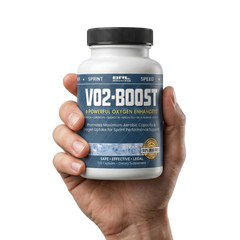
BRL Sports includes cordyceps in VO2-Boost as part of a multi-ingredient formulation intended to support aerobic performance and oxygen utilization. The VO2-Boost ingredient breakdown identifies the ingredients used in the formula. Research on cordyceps alone does not establish the effectiveness of the complete product, and findings from one cordyceps preparation may not apply to another.
For athletes evaluating a natural oxygen supplement, aerobic training remains the primary method for developing VO2 max. BRL Sports' guide on how to increase VO2 max covers training approaches, while its collection of supplements that increase VO2 max provides information on related formulations. Supplement claims should be assessed against human research, particularly studies involving athletes with comparable training backgrounds.

Final Thoughts
Cordyceps benefits for endurance athletes remain promising but not conclusively established. Human studies suggest possible improvements in exercise tolerance and aerobic capacity, although results vary by population, formulation, and training status. Evidence for meaningful VO2 max improvements in well-trained athletes remains limited.
Cordyceps is included in VO2-Boost for its potential role in supporting aerobic performance and oxygen utilization. However, research on individual cordyceps preparations does not establish the effectiveness of the complete formulation.
For endurance athletes, structured aerobic training remains the most reliable approach to improving VO2 max. Cordyceps supplementation should be evaluated as a potential complement to training, not a substitute for it.
Frequently Asked Questions About Cordyceps Benefits
Is cordyceps effective for endurance athletes?
Cordyceps may support exercise capacity, but evidence of meaningful performance improvements in trained endurance athletes remains limited. Most positive human findings come from small studies involving older or recreationally active participants.
How long does cordyceps take to show effects?
Human studies have typically evaluated cordyceps supplementation over several weeks, often around six to twelve weeks. However, there is no established timeframe for noticeable endurance benefits, and some athletes may experience no measurable improvement.
What is the difference between Cordyceps sinensis and Cordyceps militaris?
Cordyceps sinensis and Cordyceps militaris are different fungi with distinct chemical profiles. Their extracts may contain different concentrations of bioactive compounds, so research findings from one species or preparation cannot automatically be applied to the other.
Does cordyceps increase red blood cell production?
There is insufficient human evidence to establish that cordyceps supplementation increases red blood cell production. Findings from laboratory or animal research do not demonstrate the same effect in healthy athletes.
Can cordyceps replace altitude training?
No. Cordyceps has not been shown to reproduce the physiological adaptations associated with altitude exposure, including responses to reduced oxygen availability. It should not be considered a substitute for altitude training.
Is cordyceps safe for competitive athletes?
Cordyceps has been studied in humans, but long-term safety data and information about interactions remain limited. Competitive athletes should consider product quality, third-party banned-substance screening, and potential medication interactions before supplementation.
Does a higher cordyceps dose produce better endurance results?
There is no established dose-response relationship demonstrating that higher cordyceps doses improve endurance performance. Study doses vary by species, extract, and formulation, making direct comparisons unreliable.
Can cordyceps improve recovery between endurance sessions?
Cordyceps has been investigated for biological processes associated with fatigue and exercise stress, but direct human evidence of faster recovery between endurance sessions remains insufficient.
Sources:
- Chen, S., Li, Z., Krochmal, R., Abrazado, M., Kim, W., & Cooper, C. B. (2010). Effect of Cs-4 (Cordyceps sinensis) on exercise performance in healthy older subjects: A double-blind, placebo-controlled trial. The Journal of Alternative and Complementary Medicine, 16(5), 585–590. https://doi.org/10.1089/acm.2009.0226
- Hirsch, K. R., Smith-Ryan, A. E., Roelofs, E. J., Trexler, E. T., & Mock, M. G. (2017). Cordyceps militaris improves tolerance to high-intensity exercise after acute and chronic supplementation. Journal of Dietary Supplements, 14(1), 42–53. https://doi.org/10.1080/19390211.2016.1203386
- Parcell, A. C., Smith, J. M., Schulthies, S. S., Myrer, J. W., & Fellingham, G. (2004). Cordyceps sinensis (CordyMax Cs-4) supplementation does not improve endurance exercise performance. International Journal of Sport Nutrition and Exercise Metabolism, 14(2), 236–242. https://doi.org/10.1123/ijsnem.14.2.236