

Key Takeaways:
- Ingredient Research: VO2-Boost's scientific rationale comes from research into individual ingredients and their potential relevance to endurance-related physiological processes.
- Performance Expectations: Evidence supporting an ingredient's effects does not automatically establish that the complete formulation improves VO2 max or endurance performance.
- Informed Supplementation: Understanding ingredient functions, product instructions, and training goals helps athletes make better decisions about using VO2-Boost.
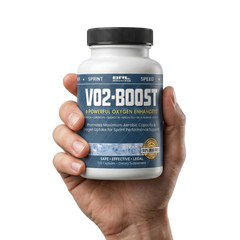
Does VO2-Boost actually work for endurance athletes? A VO2 boost review should examine more than product claims, focusing on the ingredients, their scientific rationale, and the exercise-related outcomes supported by research. Understanding these distinctions helps athletes evaluate whether a supplement aligns with their performance goals.
BRL Sports approaches endurance nutrition through research-informed ingredient selection and an emphasis on physiological processes relevant to sustained exercise. VO2-Boost reflects this approach by bringing together ingredients investigated for their potential roles in exercise metabolism and endurance-related functions.
This article explores how VO2-Boost is formulated, what scientific research suggests about its potential benefits, and what athletes should consider before incorporating it into their training routines.

What Is VO2-Boost and How Does Its Formula Work?
VO2-Boost is an endurance-focused supplement from BRL Sports formulated with ingredients selected for their potential roles in exercise metabolism, cellular function, and sustained physical activity. Its approach centers on supporting physiological processes relevant to endurance rather than providing a short-term stimulant effect alone.
A VO2 boost ingredients review should examine how individual compounds relate to athletic performance and whether their proposed benefits are supported by scientific research.
The formulation's scientific rationale can be understood through three areas:
- Energy metabolism: Ingredients investigated for their influence on cellular energy production and fuel utilization during exercise.
- Oxidative stress: Antioxidant compounds studied for their interactions with exercise-related cellular stress and recovery processes.
- Endurance-related physiology: Compounds researched for their potential relevance to sustained exercise and metabolic regulation.
The formula includes several ingredient groups with different proposed functions:
- Rhodiola and cordyceps: Botanicals investigated for their potential effects on fatigue, exercise tolerance, and endurance-related responses.
- Catechins and quercetin: Plant compounds studied for antioxidant activity and their possible influence on exercise metabolism.
- Beta-alanine: An ingredient that supports muscle carnosine production, which can help buffer acidity during high-intensity efforts.
- Nutrients and supporting compounds: Vitamins, iron-related nutrients, and antioxidants associated with normal physiological functions relevant to exercise.
These ingredients are identified in the official VO2-Boost ingredient breakdown. The formulation combines several approaches to endurance support, although the strength of human performance evidence differs between ingredients.
Does VO2-Boost Actually Improve Endurance and VO2 Max?
VO2-Boost contains ingredients investigated for their potential to support endurance-related physiological processes, but evidence for individual compounds should be distinguished from proof that the complete formula increases VO2 max.
For athletes asking “does VO2 boost work?”, the most useful approach is to examine what research has demonstrated about its ingredients and the specific outcomes measured.
What Does the Research Suggest?
Several ingredients in VO2-Boost have been studied for exercise-related benefits:
- Beta-alanine: Human research supports its ability to increase muscle carnosine levels and improve performance during certain high-intensity efforts. This does not directly establish improvements in VO2 max.
- Rhodiola: Some studies suggest potential benefits for perceived exertion and exercise tolerance, although findings vary across populations and protocols.
- Cordyceps: Research has explored its influence on aerobic exercise capacity, but results remain mixed, particularly among trained athletes.
A VO2 max supplement review should distinguish improvements in exercise tolerance from measurable changes in maximal oxygen uptake. These are related aspects of performance, but they are not interchangeable.
The VO2 max supplements science review provides further context on ingredients investigated for aerobic performance. Meanwhile, How to increase VO2 max explores the training strategies that remain central to developing aerobic capacity.
VO2-Boost offers an ingredient-based approach to endurance supplementation, with compounds selected for different exercise-related functions. Its potential value lies in this research-informed formulation, while a specific improvement in VO2 max would require direct evidence from studies of the finished product.

What Should Athletes Consider Before Using VO2-Boost?
Athletes considering VO2-Boost should evaluate its ingredient profile, product instructions, and compatibility with their training goals. Understanding these factors helps establish realistic expectations and supports informed supplementation decisions.
Review the Formula and Product Guidance
A practical VO2 boost faq should address three considerations before athletes incorporate the supplement into their routines:
- Ingredient awareness: Review the complete ingredient list and check for compounds that may overlap with other supplements or medications.
- Recommended use: Follow the product's current label instructions rather than assuming that higher amounts or different timing will produce better results.
- Training compatibility: Consider how supplementation fits alongside endurance training, adequate fueling, hydration, and recovery.
Athletes can consult the BRL Sports FAQs for additional product-related information and guidance.
Set Expectations Around Training Goals
VO2-Boost is designed around ingredients relevant to endurance-related physiological processes. Athletes interested in aerobic development should evaluate the supplement within the context of their overall training program, rather than treating supplementation as a substitute for progressive exercise.
The Supplements that increase VO2 max collection provides an opportunity to explore other endurance-focused options and compare their intended applications.
Ultimately, the most useful approach is to assess VO2-Boost according to its ingredients, intended functions, and relevance to individual training needs.

Final Thoughts
A VO2 boost review should consider both the scientific rationale behind the ingredients and their relevance to endurance training. VO2-Boost brings together compounds investigated for exercise metabolism, fatigue resistance, and other physiological functions that may contribute to sustained performance.
BRL Sports approaches endurance supplementation through research-informed ingredient selection, offering athletes a formulation designed around multiple aspects of exercise physiology. While direct clinical evidence is needed to establish whether the complete formula increases VO2 max, its ingredient profile provides a meaningful basis for evaluating its potential role alongside structured training, proper nutrition, and recovery.
Frequently Asked Questions About VO2 Boost Review
Does VO2-Boost actually work for endurance athletes?
VO2-Boost contains ingredients studied for their potential effects on exercise metabolism, fatigue resistance, and endurance-related functions. However, research on individual ingredients does not establish that the complete formulation improves endurance performance or VO2 max.
How long does VO2-Boost take to show results?
There is no established timeframe for measurable results from the complete VO2-Boost formula. Different ingredients have been investigated over varying supplementation periods, and individual responses may depend on training status, nutrition, and exercise demands.
Can VO2-Boost increase VO2 max without exercise?
VO2-Boost should not be expected to increase VO2 max without appropriate training. Structured aerobic exercise remains the primary method for improving maximal oxygen uptake, while supplementation may play a complementary role.
Is VO2-Boost suitable for runners and cyclists?
VO2-Boost is positioned for endurance-focused activities, including running and cycling. Its ingredients have been investigated for physiological functions relevant to sustained exercise, although individual suitability depends on training goals and health considerations.
Is VO2-Boost a pre-workout supplement?
VO2-Boost is marketed as an endurance-focused supplement rather than a conventional pre-workout. Its formulation emphasizes ingredients associated with exercise-related physiological processes. Athletes should check the current label for stimulant content and specific ingredient information.
Can VO2-Boost be combined with other sports supplements?
Combining supplements requires checking for overlapping ingredients, excessive intake, and potential interactions. Athletes using medications or multiple performance products should consult a qualified healthcare professional before combining formulations.
Does VO2-Boost improve oxygen delivery to muscles?
Some ingredients in VO2-Boost have been investigated for functions relevant to exercise metabolism and aerobic performance. However, this does not establish that the finished product directly increases oxygen delivery to working muscles.
Where can athletes find reliable information about VO2-Boost?
The official BRL Sports website provides product information, ingredient descriptions, and usage guidance. Athletes can also consult peer-reviewed research to understand the evidence behind individual ingredients and their relevance to endurance performance.
Sources:
- De Bock, K., Eijnde, B. O., Ramaekers, M., & Hespel, P. (2004). Acute Rhodiola rosea intake can improve endurance exercise performance. International Journal of Sport Nutrition and Exercise Metabolism, 14(3), 298–307. https://doi.org/10.1123/ijsnem.14.3.298
- Hirsch, K. R., Smith-Ryan, A. E., Roelofs, E. J., Trexler, E. T., & Mock, M. G. (2017). Cordyceps militaris improves tolerance to high-intensity exercise after acute and chronic supplementation. Journal of Dietary Supplements, 14(1), 42–53. https://doi.org/10.1080/19390211.2016.1203386
- Hobson, R. M., Saunders, B., Ball, G., Harris, R. C., & Sale, C. (2012). Effects of β-alanine supplementation on exercise performance: A meta-analysis. Amino Acids, 43(1), 25–37. https://doi.org/10.1007/s00726-011-1200-z